
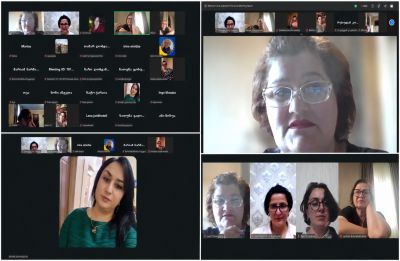
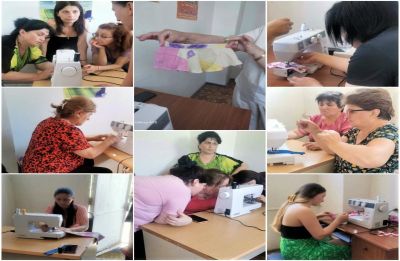
The Women’s Fund “Sukhumi” held an online workshop via Zoom with youth groups from Chokhatauri and Vani municipalities.
The session focused on technology-facilitated violence and digital safety. Participants received practical guidance on protecting personal data, securing accounts, cyber hygiene, and recognising and responding to online abuse.
The workshop was facilitated by Women’s Fund “Sukhumi” representatives Nino Chabukiani and Lali Shengelia. The discussion highlighted the importance of digital safety knowledge and open dialogue as key factors in preventing violence among young people.
The project is implemented with the support of the WAVE Network
On February 12, 2026, an online meeting was held via the Zoom platform with women’s groups from the municipalities of Khoni and Senaki, organized by the Women’s Fund Sukhumi.
The main topic of the meeting was technology-facilitated abuse and the forms of control and pressure exercised in digital spaces within intimate relationships. Participants discussed the challenges present in online environments and the harm that often remains unnoticed.
Special attention was given to practical issues, including the protection of personal data, account security, preservation of evidence, and ways to seek assistance when needed.
During the meeting, participants emphasized the importance of recognising the problem and speaking openly about it, which is an essential prerequisite for preventing violence and creating a safe environment.
The project is implemented with the support of the WAVE Network
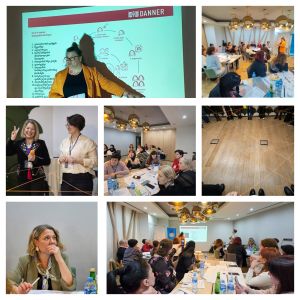
A three-day training on “Violence, Trauma Response and Trauma-Informed Practices” was held for the staff of the Women Fund “Sukhumi”. The training was facilitated by Karen Boesen, trainer from the partner organization Danner. The aim of the training was to further develop sensitive, safe and professional approaches to working with women affected by violence.
Participants discussed gender norms and stereotypes, the multilayered nature of violence and the social-ecological model. Special attention was paid to understanding different types of violence, mechanisms of coercive control and the invisible harm that undermines women’s safety and freedom even without physical signs.
Within the training, the four main forms of trauma response — fight, flight, freeze and fawn — were explored in detail as natural survival mechanisms. It was emphasized that support must be based on safety, trust and respect for a woman’s choices so that assistance does not become a new source of pain.
The third day focused on practical tools and the importance of self-care. Participants reflected on how to listen to women survivors without judgment, how to maintain professional sensitivity, and at the same time protect their own emotional resources from professional burnout.
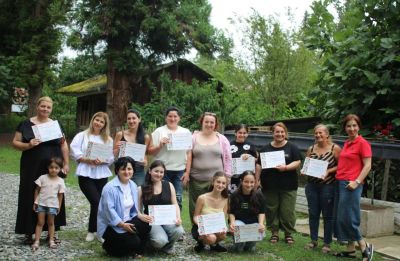
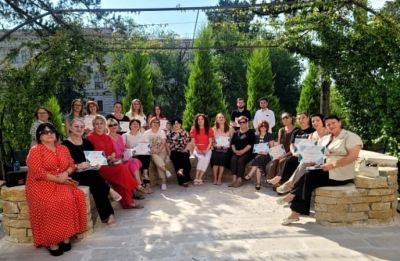
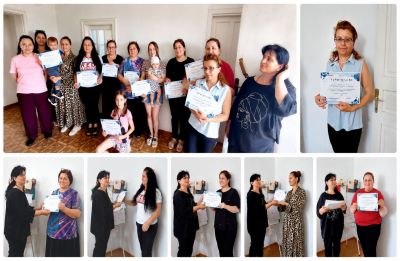
At the end of the training, participants received certificates. The acquired knowledge and skills will help the Women Fund “Sukhumi” team to make support for women even more trauma-informed, compassionate and safe.
The Women Fund “Sukhumi” expresses its gratitude to the partner organization Danner and to trainer Karen Boesen for the valuable experience and support.
The project is implemented with the support of CISU
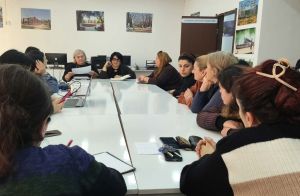
Women's mutual assistance groups of all ten municipalities started the new year with a renewed motivation. During their first meetings, they mainly discussed municipal services, changes, and innovations.
Group members listen attentively to a psychologist, whose advice and individual consultations are particularly helpful.
Digital literacy is important to them – working with social media, familiarization with the Fund “Sukhumi” website https://sosfsokhumi.ge/ and learning how to find the information they need.
In Khobi, the focus was on youth, and in Tskaltubo - on the importance of digital education. In Senaki, new participants were introduced to the results they had achieved together. The meeting in Chokhatauri was particularly interesting – the group participants are members of the folklore ensemble “Taoba” from Gogolesubani, who brightened up the time spent together with dancing and singing.
Most of the groups have shown growth, which is a sign of effective work and success.
The project is implemented with the support the Equality Fund (Canada)
New green surfaces will soon appear on the school playground in the IDP community of Kopitnari. The surfaces were purchased, but were not installed due to bad weather.
Work is underway at the former Tskaltubo statistical department building, and fencing installation will begin soon.
Our activists participate in both processes.
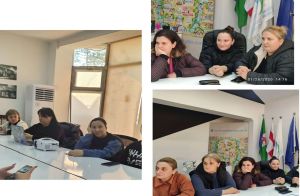
During a meeting of Tskaltubo women's mutual assistance group, the participants spoke about the progress of civic initiatives and provided detailed information.
The project is implemented by a coalition of non-governmental organizations: the Association of IDP Women "Consent," the Women's Information Center, and Charity Humanitarian Women Fund “Sukhumi”.
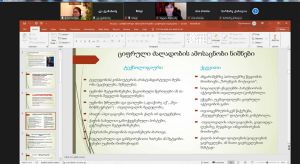
A meeting on the topic of technology-facilitated abuse in intimate relationships was held with the participation of young people living near the dividing line between the Tsalenjikha and Zugdidi municipalities. The session was facilitated by Emma Kamkia and psychologist Eka Kvachakidze.
Together with the young participants, we discussed how violence manifests in digital spaces and how technology can become a tool of control and pressure. The conversation focused on the warning signs of digital abuse, its psycho-emotional and social consequences, as well as existing legal protection and support mechanisms.
In the practical part, participants received information on protecting personal accounts, properly preserving digital evidence, and ways to seek help when needed.
Participants noted:
“I used to think online control was just jealousy. Now I understand that it is a form of abuse.”
“The most important thing was learning that receiving help is actually possible.”
Recognise. Speak. Act.
Read the guide: “Technology-Facilitated Abuse in Intimate Relationships — Recognise It and Protect Yourself.”
The project is implemented with the support of the WAVE Network
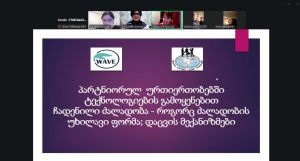
An online meeting was held via Zoom for women living near the dividing line between the Tsalenjikha and Zugdidi municipalities. The meeting was organized by the Women’s Fund Sukhumi and focused on one of the most complex and often invisible issues — technology-facilitated abuse in intimate relationships.
Participants discussed how violence continues in digital spaces and how technology can become a tool of control and pressure. Women shared their everyday experiences — challenges that are rarely visible online yet cause real psychological and social harm.
Special attention was given to practical issues: protecting personal accounts, preserving digital evidence, and learning about services where women can seek support.
The most powerful part of the meeting was the participants’ sincere reflections.
One participant noted:
“Unfortunately, in regions and villages, this issue is often viewed differently. Sharing social media passwords and banking information with husbands is considered normal by many. It is very important that you have started this conversation.”
Another participant spoke about why violence often remains unspoken:
“There are many cases of online abuse around us, but women often cannot speak out — there is little trust in society, and girls frequently do not feel supported by their parents. There have been cases when a girl shared her experience with her family and was blamed instead. In such moments, she withdraws and faces emotional struggles alone.”
The discussion also showed that the problem affects more than just women:
“Online violence is not only about women — young men are also often victims of abuse in digital spaces.”
The meeting once again confirmed that recognising the problem is the first step toward change.
Recognise. Speak. Act.
Read the guide - “Technology-facilitated abuse in intimate relationships — recognise it and protect yourself.”
The project is implemented with the support of the WAVE Network
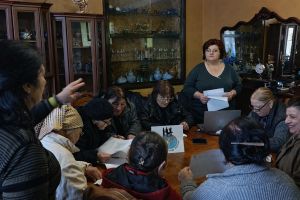
A workshop on “Identification, Support, and Response to Domestic Violence against Women in Local Communities” was held in Geguti with the target group of women from Tskaltubo municipality. The session was led by a woman community leader.
The aim of the workshop was to inform participants about the forms of domestic violence, ways to identify it, and available support services for survivors. Attention was given to practical mechanisms that help women protect themselves and support other women affected by violence.
During the meeting, women openly shared their observations. For many, it was a new realization that violence is not limited to physical harm and also includes economic and psychological forms.
Participants’ feedback:
- “I learned about economic violence for the first time.”
- “I learned how to protect myself and help others.”
- “I realized that what I considered normal actually contains forms of violence.”
- “Many women perceive psychological violence as normal.”
- “Having such information is very important.”
- “These topics should be discussed with everyone — women, men, and young people.”
- “We learned about the local program of the Tskaltubo City Hall.”
Participants emphasized that lack of information remains a major barrier; many women do not know where and how to seek help, which complicates timely response.
The project is implemented with the support of CISU
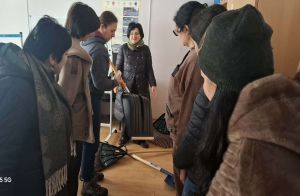
The "Social House for Community Needs" initiative, presented by Senaki mutual assistance group, will soon be launched.
Small household appliances and garden tools are already purchased by group members for shared use as part of the initiative.
A Karcher high-pressure washing machine will completely replace the hand wash of carpets, cars, and other bulky items, making the work easier for women and men and improving the well-being of the community.
Tools needed for garden and yard improvement will help community members address common problems that have existed in the settlement for years.
The entire IDP community: women, men, and youth will benefit from the services of the “Social House”.
Members of the mutual assistance group have new ideas for the future related to expanding the functions of the “Social House”.
The project is implemented by a coalition of non-governmental organizations: the Association of IDP Women "Consent," the Women's Information Center, and Charity Humanitarian Women Fund “Sukhumi”.
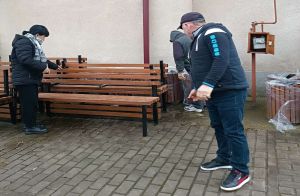
Renovation of an old park on the territory of church and installation of benches and trash bins in the parks - these two initiatives, implemented by the women's mutual assistance group "Community Power" in Khoni IDP settlement, is coming to its end.
The funds requested for these civic initiatives are fully utilized, all necessary equipment is purchased, and community residents are awaiting good weather to begin work.
Amusement rides, benches, trash bins, and a lawn mower - the acquisition of all these items and the materials needed for their installation means the creation of comfortable open spaces and a cleaner environment.
As a result, the implementation of these initiatives will increase community engagement and their sense of responsibility for their own settlement.
The project is implemented by a coalition of non-governmental organizations: the Association of IDP Women "Consent," the Women's Information Center, and Charity Humanitarian Women Fund “Sukhumi”.